You are currently logged-out. You can log-in or create an account to save favorites and more. more info
Gandhi Monastery: Path to Spiritual Mastery
This talk delves into the journey and spiritual growth experienced at Gandhi Monastery, detailing the speaker's personal interactions with monks and participation in sessions over several days. The narrative recounts cultural and religious practices, focusing on the teachings associated with Gandhi Monastery and the prophecies surrounding Lama Tsongkhapa, highlighting the monastery's significance in maintaining pure teachings. It describes the monastery's examination system and its rigorous memorization practices, underscoring the spiritual and academic rigor within the monastic education system.
- Lama Tsongkhapa’s Role and Prophecies: The narrative references the prophetic statements by Buddha about the future importance of Gandhi Monastery, founded by Lama Tsongkhapa, emphasizing the continuity and purity of Buddhist teachings.
- Lama Tsongkhapa's Biography: Mentioned as a critical resource for further understanding the historical and spiritual impact of Gandhi Monastery and its founder.
- Gandhi Monastery's Academic Structure: The talk elaborates on the monastery’s examination processes and the expectation of students memorizing numerous pages of Buddhist texts, such as those by Nagarjuna and Vidya, reflecting the strict academic culture.
- Radhyanaka by Hathajana: A critical text that is integral to the curriculum at Gandhi Monastery, noted for its extensive memorization requirements and commentary studies.
AI Suggested Title: Gandhi Monastery: Path to Spiritual Mastery
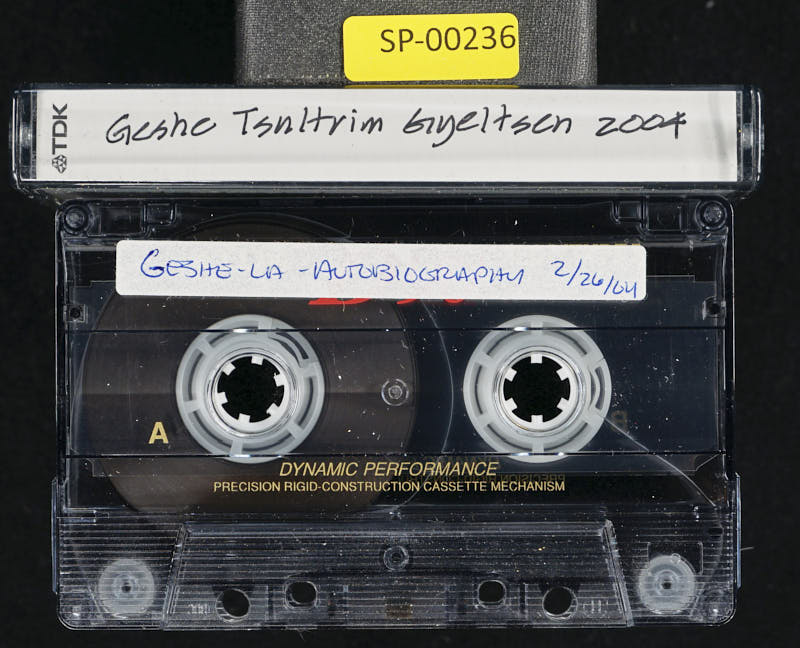
Here, in 24th, Tibetan October by Lina Khalid. So we are staying at night by the mountain, staying there. Then many monks come to the road. We are staying by the road. So then some monks came to us. They said, you are from where? Which village? They said, we are a village like this. Then they said, oh, we are the same place.
[01:00]
Those monks, I didn't know. I don't know. But they are very close to my village. And some of them, when they went to Lhasa, my father asked to come, giving party for them. So they told me later. So there says, now, tomorrow, you'll come up. Like this kind of a building there. Come to there. We will meet you. Then tomorrow, started to the college. But I thought, no, I'm going to. Next day, very, very astrocious days. Lama Jango was in allotment day. But then, very great to see that.
[02:06]
And that day, being in Gandhi University, holy places, some very auspicious, very great auspicious, we taught. But I didn't think about it. I stayed in Gandhi, the monastery. But then, Next day, early morning, we went up to Dhandari. So by the monastery down there, we made tea. And then the tea. Then we went to buy the monastery outside of the monastery, actually. We were there, staying there. All those monks came. Two monks came. said myself and my um relative his name is doji pencil myself only we two they took it and the others also took it with us and they gave
[03:30]
They got tea and also started to eat in the morning. Then they says, now you two start to go to the session. Anyways, then, yeah, already to go, just staying in the, staying in the dandy. Because next day, early morning, when come up, when I see the... Gandhi monastery, to ministry, faith, devotion, really. I thought, I don't stay here. Why I go? This is a great place. I must stay here. I thought already. Then came up to the monastery. They said, okay, now we are ready for your rob and everything. So now go to session. i'm surprised then yes myself and also my cousin we went to the session because we are ordination of monks already from the from the channel my local monastery so therefore we went to the session until
[05:00]
Yeah, with Gandhi monks. Actually, Gandhi Chokjin. Chokjin means Gandhi has, normally there are two colleges. Actually, sometimes four colleges we can sell because the Jitu and the Jimei need to be included in the Gandhi monastery. So there were four colleges. But normally there are two colleges. two colleges, Gandishatsi and Yashchansi. So we are Gandishatsi. So we went to a midday session. And then my friend, which people came with us, they are from the outside, to praise, and to see the monks when monks came out.
[06:02]
Very funny. They asked from the, you know, make respect to the monks. And myself and my cousin, we came with monks, came back from the chanting hall. They were smiling and we said, we had like a kavzi. We said, what is a kavzi? cookies, no cookies. So we got some cookies and we gave to them. Then also we stayed. The next day, then they left to Svasa. Then we are staying at the Gandhi University. Then that's maybe 15 days, there is not the start of summer set or summer session, big winter session.
[07:12]
Winter session is not the start. Then between there, there also means some areas, They'll be talking, and I'll visit to them, and they'll say, a few days, just like, almost like in Tibet, you know. You know, they're talking. They know my family. Everyone, so they know. And they talk about all those, and so quite enjoy. So anyways, then, like that. So... then started in the Dande. So then, winter session, we started, then we started beginning class. We need to start beginning class. So we are, myself, beginning class incandes, but I have five classes already moved, already, so same kind of subject.
[08:23]
I can bait with a new classes. Those monks are very difficult to bait. Very small, very short or very small to ask questions, something like this. And everyone says, I know already because I study already. So then, One day, the eye bait with the other, sometimes two post-colors and the next, the 12th classes, together they bait during the session. So one day, Sahaja Saurambacha, it was Abbot of the Gandhi Shatsi colleagues.
[09:24]
Abad. So, Shaji Somba told me, did you study logic? Did you study, say, in your place? I said, yes. I studied. Okay. Now, how many classes you... head already, been already, go through study already, you can move to earn your class. Where is that? From Chandu. You can go there. He told me. Then I came back to my teacher. My teacher is the chanting leader of this Gandhi Shatsik. same area where his village is not far from my village, where he was born.
[10:27]
So, I told Chaji Sorobaji, Ken Rinpoche says, I can move the classes where I was in class in Chando. You can go there. He told me. Then my teacher says, now care which is very calm, but you need through the Kamsi games, through the also the house, the dispelling of the house. House Kamsi, you know. Many houses. Do you know? Yeah. Houses. Discipline.
[11:29]
Eleven. Eleven dormitories. No, dormitories, no. Eleven houses. Houses. Same like the colleges. Yeah. There's no dormitories. Each one has many dormitories. Seven houses, you can say. Eleven. Yeah, eleven houses. So, if you correct the ways, you need to request, can I move through the classes? You need to request. Oh yeah, my house is Gandhin Loba, Loba Kansi. So Loba Kansi, Kansi means the dispelling of the house. Dispelling now, is he? Yeah, just. So he, I, then also with one khada and with one tanga gobbu, means one tapete kong, seba kong.
[12:38]
That's traditionally, he gave it to the camera, which he did, of course, to move. So I did, I don't have this, but my teacher, He gave those tests to Kada and Kankapo, this thing. And then recourse. Then I moved to five classes, then jumping from bottom. Other people, they think, other students, yeah, then why? So anyways, I studied in my local monastery already. So each way I go, to move through those classes. One day I need to give an answer. They also ask the questions, each class, you know. So I need to give an answer. They beat to me. And I gave an answer.
[13:41]
Then I went to the second year of the Pajaparamita class. So then, from there, then I studied. And then, after that, one, two years after then, also Gandhi University, I have also need to be the post. postures, baiting ceremony I did also in the college. Then after that year, after year two, one, two years after also another debate ceremony with the Pana from Ganeshansi,
[14:52]
So come. All those things. Then I have also the benefactor. I have benefactor. Now, I have benefactor. Benefit is very, very good for me. Really, it is. Everything. Okay, now I can. the first few of them then and then yeah how do i have not in planning yeah yeah yeah i will now this way um i saw when we made stop the one night by gandhi monastery um the the place is the lucky Near the mountain or the bottom of the mountain.
[15:57]
It's there. It's there. It's there. The balcony of the coronation of the sea. Yeah, that's it, yes. It's there. Stay there. And then, we thought, I am I. Everybody also agreed. Next day, Lama Chunkabad, it's the Great Enlightenment Day. Everybody wanted, go there to see the Gandhi monastery, and also to get blessing from the monks, and also the Lama Tsangkapas, actually real bodies there. What do you call this? Preserve this whole body? Yes, yes. So that's a very great holy place.
[17:00]
So therefore, and also date, it's also next day, the day of the Lama Jom Papas, an automatic day. So we wish God. But still, the night, and I wish God, Gandhi, to see the Manus, to get the blessing of the Holy, to see the soul. you know, but still I've been thinking about Sarah. So then monks came, those two monks come to us, they says, you are born with grace. Then he says, we are from here, like this, and then we say, We said the name of the village. And the song was in book. So we are different members, people.
[18:04]
So living in different villages. So we said. And then they said, oh, we are from Chaka. We Chaka. We said, very close to my own name, this whole village. where I was born. So, very close to me. So, then we talked, and they knew my parents, my home. They said, okay, now, tomorrow you are up to the master. And then, they asked me to stay, stay in Uganda. So, I said, no. I'm going to Sarah. It's very nice to explain here about Sarah. Because Sarah also, many also, my classmates, some of them, my classmates from Jambu, so they, they are in Sarah.
[19:11]
So I know it was monks. And we said, from the land or local monastery, Tamil. So then, the next day, we have, I think it was, we didn't make tea yet. First of all, when daylight came, We are up, and then we go up through the mountain together, through the mountain. Then, when we mostly, they're almost, more than halfway to the mountain, then we saw the Kandimuri Street, just tremendous, like a clean and, you know, blue,
[20:19]
It looks like the top of the skies. It's white clothes. And also the monastery is actually like it. Between the sky and the earth is the horizon. Just like they stand up. Just like a tremendous vision of the monastery. So happy that something might say. The mind changed, I thought. I don't state yet why you go. I think, but it's better this. I don't think that. So, to be honest, I paid devotion until I had certain pressures that come, crying, etc. So, then, by the Sacramento Road, We're staying there empty, we're making tea.
[21:24]
Then all those the day before which we saw the noise, they came to meet to us. They said, now we will come up. They're going to. They asked me to come up. They're going to. Then we went up to the monkey, which uh which we saw uh don't a place this place they have also the singing monks you see some of them this ship want to be here also they have reincarnated and this you know the one is the the gandhi shots is chanting leader there's gay we'll find that here in the chanting later of the Gandhi Shatsi, those are same area, almost in the same area of my place.
[22:36]
I think they said, they said, so then, there's now Myself and my cousin, which he came after me, he and myself, then we stayed. And that day, they requested today monastery is actually through the, through the, well, there's houses. So, the request anyways to, to the, you know, to the spinning of the house. So then, we're changing, we have a, and then, that,
[23:48]
But there is a second, one session. We went to a second, you see. The session, you see, to call it just to be the, when you touch it, to call it just to be the most channel. So then, then tea, and also, . or biscuits or something like that, because of their days, because of their day. Then we came out from the Chantung Hall. My apprentice, they are, those are watching to the monks, you know, coming up from the Chantung Hall, which the people came with me, for my greats, me from Chantung to Vasa. Those are, if they sing like this, we are from Israel, you know?
[24:51]
So, then they left. They left that day. I think they, [...] Trevasa. They reached him. And then that night, twenty-fifth, Tremendous are light orphans, many different kinds of orphans. Then, especially light orphans, outside, by the window, by the top of the building. Tremendous are lights, you know. Normally outside these, there's no light.
[25:55]
But that night, anywhere else you can see, you'll be laughing because you saw bottle limbs, bottle limbs, so hundreds, thousands, bottle limbs, everybody said, come to college, Byungal College, Sokching, and also drumentaries, all colleges, drumentary. Everybody is there, quite often. They are from very, very devout, during the night. They are individually, monks in drumentary. They also individually did, yeah, often repair. I think the same kind of update. I would have spoken around, like some proper. Often, everybody's together, you know, sometimes there's one, sometimes in the marks, you know, more fire, four, five marks, or just organize together.
[27:10]
Okay, darling, chanting. So then that night also I saw some mother, you see, Chandu. Some monks from Chandu and also some of the close to my palm. I saw the name also. And then, anyways, just kind of play. I think I was very happy. My friends left, but I didn't say anything. I didn't send a message to my family, not yet, because they are staying in the plaza, entered to a non-positive niche. So therefore, I thought I can get a message, and I can return.
[28:15]
with a day in the, in the, uh, Krampasa. And I go to the Menopastiva. So, then we say goodbye, and good tips, this kind of like. Mm-hmm. Hello. Oh, hi. Oh, I'm okay. Yeah, that's okay. Yeah, yeah, yeah. You come up if you have time. Okay. Okay, good. Okay then. Okay, bye. All right. So anyway then, so now, I think I would like to go to Gandhi Monastery. It's a Gandhi Monastery, it was prophesied
[29:16]
By Buddha. He didn't say those terms, I think. Did he know that? No. Buddha said, in the future, there will be a monastery called Gandhi, and also Lama Thangkapa will be the founder of the ... with another paper maybe there. Yeah, I have my own, I think you can see. Yeah. So, the Gandhi is the, where I was in Chandu, I didn't know the quality, great quality of the Gandhi ministry. I know general. The Ghandi monster, the hunger of the Lama Tsongkhaka.
[30:20]
Lama Tsongkhaka is the great holy master. That's what I know. But I don't know the quality of the Ghandi monster. And how did I do the proper side. I didn't enter the... I came to Tandri and studying and... It is a later thing, I think. So anyways, Lama, generally, Lama Jankopa is the taking part of the honorary person or taking part of the monks, for the monks. not but it is real reality is musician musician is the wisdom wisdom better you can say oh wisdom how about this hour you can say so now better
[31:46]
2,500 years before, in India, we don't was, yeah. That time, Lama Tsongkhapa was a son, S-O-M, son of the Brahman, you know Brahman? The Brahman. That child, anyway, when he saw the Buddha, he said, like a child. Then, Lama Tsongkhapa gave, when he brought me the son to see the Buddha, he gave it, brought me the son, gave it. very clear, kustal rosalim.
[32:51]
Kustal, very clean, kustal rosalim. He gave to Vidya. And Vidya accept that one received, he gave, and then Vidya gave to him kansha, kansha. I think that church child, Vida was one of the king of the Naga gave to the Vida. So Vida gave to the Brahmi some son. And Vida, that time, Vida said to the Ananda. Ananda, Ananda means Vida. attended, Buddha says to the Ananda.
[33:52]
Ananda, which Brahmi's same son, Brahmi's same, gave present me, present Kustaroja to me. This is the, would be in the future, His name is like Rosam Thangpa, you see? Rosam Thangpa did he say, but the first letter, you see? Anyway, at the same time, They are also Gakshishaya Gumbhajumas. It's a monastery called Gandhi.
[34:56]
That's how it comes with Gakshishaya Gumbhajumas. Would be this, yeah, Gandhi, a monastery called Gandhi. He's going to establish that monastery. And also then he says, this Brahmi son's back time will be in Tibet. He, he make my teachings very pure. Because the Kustod rosary symbolizes it very clean. And he, this Brahmi son will be would be in the culture, in Tibet, to hold my dhatan very pure. So that's a kind of proper sign.
[36:03]
And also, there are many other ways. I think this, if they want to know, if they read and they buy out of Lama Jankaka, then they can see what. So this is the great... Anyways, I'm telling here, because of the quality of the Gandhi Monastery. And also, the director, Lama Jankapha is establishing, you know, Kundapha, Gandhi Monastery. So, quality of the... So, Lama Jankapha. Just very briefly, very little, I'm saying here. But if they want, or somebody wants to know more than this, then there is Lama Jankapha's bio about it. you see, writing by Kiddurling, what's it? No, go ahead. Because this is the funny. When talk, come.
[37:08]
When not talk, then stop automation, I think. You see. So anyways, that's it. in general. There's two colleges. Gandhi has two colleges. I think that's what I said. Gandhi's Shangtsi and Shatsi. Shangtsi and Shatsi. I need to be born to the Churches. Different areas. There's a different territory. I cannot say that. So different areas, you need me to go through the different colleges.
[38:12]
Within different colleges also, different houses also. I cannot go any other houses. I need to go for a local concert, local concert. You can't call it without the concert. You see? Uh-huh. Okay. Now, anyways, I said, Gandhi Shatsi. Then, I need, yeah, my college is the Gandhi Shatsi. The founder of the Gandhi Shatsi, founder of the Gandhi Shatsi was Khedud Rinpoche. Let's hear the one chief of the sub of Lama Chambhanga.
[39:14]
There's really two chiefs, highest two, Khedudji and Jasapji. and the Jasapji. Two both came from Satya. Jasapji. Jasapji is the order. Maybe you will read Jasapji and the Khidduji. Jasapji. Jasapji means the Lord of the Jasapji. Rehint, you know what I mean? Jasap is Rehint, Rehint. Khidruta, yes. It's a load of the... load of this... kind of accompaniment of the middle. Vidya Dhanamu Sujara Dhanamu.
[40:15]
I'm not talking about passing away, just putting it on passing away. Yeah, Lama Tsangkapa made the original, original whole, the original of the Lama Tsangkapa's sister, Jasebji, gave to Jasebji. That is going to come. Jirungoche also says, you don't see. He gave all those protecting power. He gave the power. He's teaching with Dantra in the Sutra. Get closer.
[41:22]
Ali Shatsingh, the founder of the Kedubjian. The Kedubjian was the founder of the Dendi Shatsingh. From that, since then, then always, the lineage of the abates, even today, you can count it. 21st century, is it? Yes, always. Even today, we have, you know, outside, you know, inside, you know, whatever, we are. Outside. Outside, you know. Well, we are refugees, you can say.
[42:26]
We are refugees in India now. But still, those lineage of arbiters, still, that very good man. Was that broken, you see? Unbroken, yes. See, that's it. So then, anyway, I started. The Gandhi Shatsi has now this. Maybe I say this or not. In Levenk. Houses. We lived there. Would you like a thing to live for me? Which it was? What's that? What's that? What's that? You didn't tap it in so long the first year. What's that? I started That day, Prama Tsong, that day? Yeah, after that was it.
[43:27]
Okay. These ceremonies took place when the autumn session was finished and her new session had not yet begun. That's right. That's what I immediately said. You actually had also described that after the Prama Tsong Kapas, he might make it. Oh, yeah, that's true, yeah. He had back his life. Yes. And it was also... Right off of the set. Yes. And then you go on. So the Tibetan month of November, where the college's examinations... I think when I started, and the colleges, those are going to be before this, is it? Yeah, I thought that's right. Yeah, that's good. That's good. Winter, winter, so much starter. The exams, let me see. This was the time of the annual memory examination.
[44:28]
Yes. New students did not have to take these examinations. New students being those that had completed their first, second, third, or fourth years. First year students had no exams at all, while second, third, and fourth year students had fairly simple exams. Yes, ma'am. An explanation of at least 50 pages was required each year. That's right. It took four days because each student had to recite from memory before the Kenko. At least 20 years. About 30 years. Yeah. And then Geku, you say, discipline. Right. Discipline. In charge of a month. Yes. Who checked his memorization. Since I was just beginning to study at Ganden, I didn't have to take the exam that year. But all the students were very worried about the exams. Especially those who had not had time to learn much, didn't they?
[45:30]
Yes, water. Water you get, don't they have water? Everybody, yeah. You're also improving, okay? The fifth year exam looked quite difficult. And when I took it two years later, it proved to be so. The fifth year exam. I think fifth year, don't say that. Then I think it's next year. Next year, yeah. Next year. Yeah. Yeah. I only studied and memorized texts for several years in my local monastery in Chandu, um, camps for the second, third, and fourth year students during my first year. For the fifth year examination, some good students learned to recite from memory several thousand pages.
[46:37]
The best students memorized between two they had this level. The minimum was 50 pages. One changement in both sides of a page in a Tibetan woodcut book. I'm not learned even 50 pages might have to stand up or do frustrations to the other monks. That sort of thing. Changement for monks who have failed. Yeah, maybe in this book, let's see a little bit. Some, if you have a, like a, text composed, composed, but you do have to do it. Maybe better than it. Composed by Vidya. Vidya's, you know, then one page, okay, double. They're doing double. You understand? First of all, you understand. Teaching by means a text, you know, composed by Vidya. The one page, if you have a date, two pages, counting, two pages, double.
[47:42]
Salama Tsongkhapa is also teaching, you know what I'm saying? Commentary? Commentary, yes, commentary. If you have one page, they do double. Like another genius text, if you have one page, then they make double content. Like this, you know. Another text. One page of one, just like this, you know? Like, uh, daily text. Old. Yes, ordinary, ordinary. And especially, speaking like Lama Tsongkhaba's teachings, teachings, and also Kudunumati teachings, and the Yassarimish teachings, of course, Midas teachings, and the Nagarjuna. And also, like Shanti Gellers, those kind of, if you had one page, if you remember, they make content two pages.
[48:54]
You understand? Uh, no. Okay. Another general say, if text, you know, like one of the 25, 25 long pages. That's why if you recite it, if you did it by memory, then make it 50 pages to make trouble. When you recite it, you... Yeah, if you did it by memory, to learn by memory, Nagarjuna states one page if you learn. When you do this, They make two pages. Yeah. Okay. I'll sit down here with me. Okay. Okay. No, it's no problem.
[49:56]
We talk about it. When we have an exam, some people, 2,000, 3,000, something like this kind of. Points or questions? That was your point. By memory, by memory. So if you have a Buddha's teachings, one page, if you have a, that's to take it, they count two pages. I see, that's to take it. Another journalist also, if you have a, one page. Yeah, yeah, that's it for hard, it's, we're talking, no, turns two pages. That's what I have here. This is what I know. But that's not what you're saying? Yeah. So one that we might consider our two favorites. That could be four favorites. Oh, yeah. Thousand, maybe two thousand, three thousand, like this kind of music.
[51:02]
Maybe there's more Nagarjuna's book, and there's also something there was, and there's also Lama Tsong Papa's teachings. La Ro [...] Now, Japanese content means then both sides, same way. Yeah. Quite long. We, Tibetans, both sides, we're just only one page. Okay, that's what we have to do.
[52:04]
One page is two pages. Mm-hmm. Then in the idea is that the Melodinists hold six teachings, but they're not a teacher. So all those are dictating dictation with the Romans in Tibet chant During the monks, they have tea and soup or something. They turn to later this text, which I recited text. Tea, local, baby. Then I need to be recited. Oh, by memory, yes. Yeah, I did this.
[53:07]
Now we are talking about the exams, you know. The student is the greatest number of 20. Number one. We might also receive some money and other gifts. Yeah, money, not much. Actually, like a... I think... That's, I think, man, why I was... Sorry. I think I was... The bunch of parameters. Panchaparamita classes, you know, it's three years.
[54:12]
In general, Panchaparamita classes. Panchaparamita classes, five classes. Well, there's six classes. Six classes. So, beginning and finish, Panchaparamita study, there's six classes. So, last three times, I think. I was a... For three years, I think. Yes, yes, yes, yes, yes. Yes, yes, yes. Maybe this one, I don't want to say this, just leave it. Yeah. This specimen, I, I, you say, I want to say, I was a, a, I was a section by advertise.
[55:13]
That's what I'm saying. Number one, number one, say, what's it? I was well. Remember, exist, say, advertise. Anyone, anyone, say. Top class. Top class. Yes. So to me, yes. I didn't think about it, but normally I spend enthusiastically in my room and therefore... For some years? Yeah. And then one thing really, I turned to leaders, didn't, didn't, I'm, I didn't mistake.
[56:32]
So therefore, I never, to tell me it's tiny later, you know. Sometimes I forget it. You know, if you don't remember, then two words, you need to try. I never heard that. Yeah, never heard that. So when I was, before that, when I was in the, in the Bremont Futures Palace, I can, one day, four pages, my memory, It's the rest of [...] the rest
[57:36]
Two days, two days, then? Because thousands of months. Oh, no, no. Oh, yeah. And even starting at about 9 a.m. Yeah. It was sometimes dark before they finished. Yes, yes. At about 7 or 8 a.m. Yeah, this, this, this, this. After the exam, the new session began during that session. Chica. Yes. Yes. Yes. Plurum is bigger. Plurum is bigger.
[58:48]
Plurum is bigger. Plurum is bigger. Plurum. [...] ... by number according to how well we did. Also, there were a lot of answers to almost half a day to do it. Some answers. So the answer, somebody would ask the question. One answer. With one person? Yeah. No, I don't think so. No, that's the thing. Don't say that. I think because then, it's like, others have many.
[59:49]
And I say, you know, everybody's really good. It's like, well, you know, something, you know. Seven years. Before the problem, it's a time, you know, with the This took place over the course of one month. For students and graduate teachers, I've asked the congregation. You have to know everything. There are six books on Radhyanaka by Hathajana, entitled, which I learned by memory during my college years.
[61:03]
Also trying to keep his commentary on that. So we didn't know I had someone requesting you on. There was no punishment that we had. The questions did there in about 5.30 and went on to about. You know, this time, some very high-classes students come. Around each college. And also they came to OGS also. They do this. passed, you know, exam already before. Yeah. [...] Ask a question. Ask a question. Maybe you can make it. During this exam, hundreds, hundreds of, you know, four monks, but everybody's, you know, everybody's very quiet. Then when they say, the person who gets an answer and asks the questions, they say, that's people.
[62:11]
So, very powerful. And many also, many scholars, and many also to watch, come from each college, you know, and there's great scholars also sometimes, can watch it. Yeah, really. It's very, you know, sometimes people make deliberate, it's hard and difficult. You know, they normally don't take much notices. Just kind of, you know, it picks up the corner. The Tibetan being of 103 cultures, which were monorized by all the students who could be sent. Every text of the video is called Nidharic Sada. Nidharic Sada. Do you want me to say? Do you want me to say?
[63:21]
@Transcribed_UNK
@Text_v005
@Score_57.18